From Six-Hour Weekend Releases
to 180 Secure Deployments a Month
Jenkins, GitHub Actions, and GitLab CI rebuilt around one rule — nothing reaches production without passing SonarQube, Snyk, and a JMeter load test — with Tenable.io and Splunk watching everything that does.
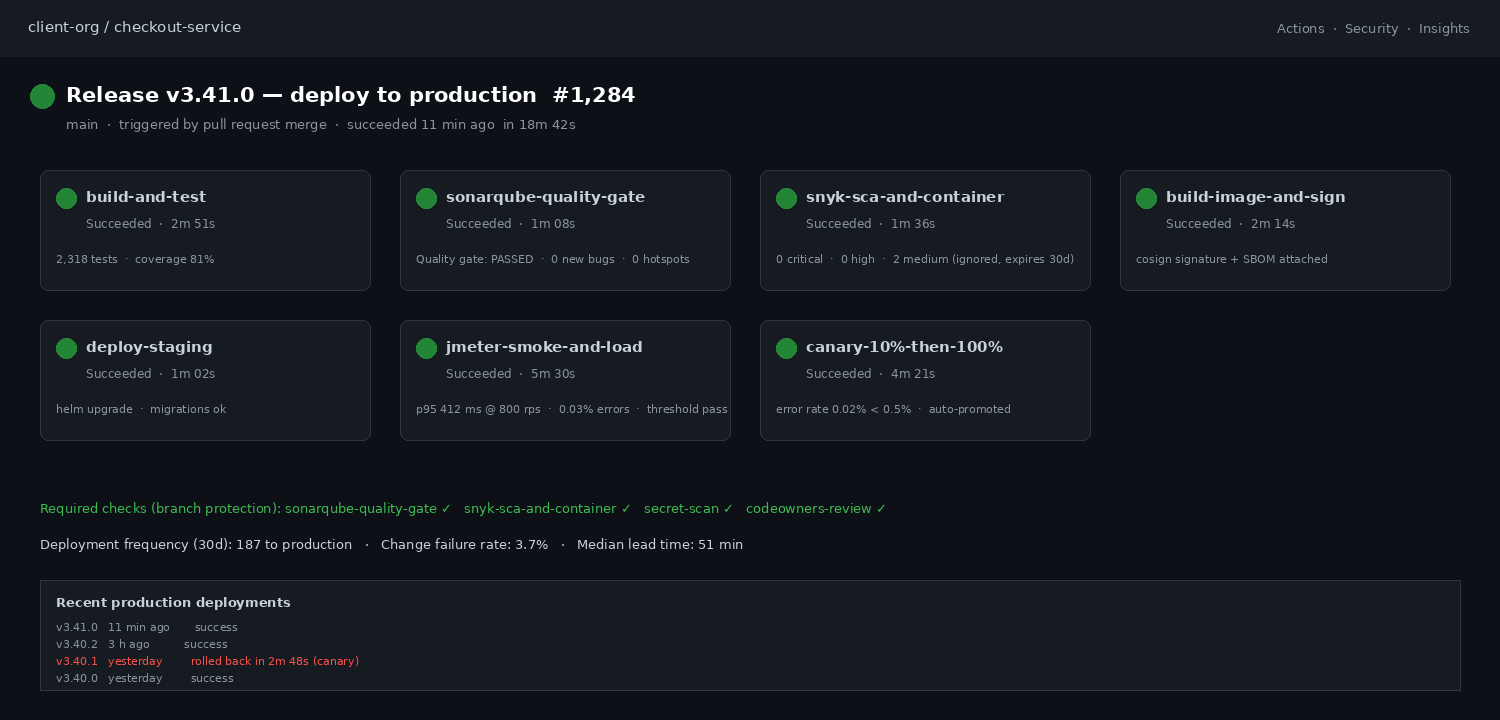 🔍 Expand GitHub Actions Pipeline
⚠️ The Challenge
The retailer shipped twice a month, and every release was an event: a six-hour Saturday window, a 41-step runbook, four engineers on a call, and roughly 14 engineer-hours of manual effort.
Three uncoordinated pipelines existed across Jenkins, GitHub Actions, and GitLab with no security checks. 28% of releases caused an incident or rollback, while baselines revealed 64 critical vulnerabilities and checkout p95 latency sat at 1.9s under peak load.
⚡ The Cyber Oxygen Approach
We executed a 14-week DevSecOps transformation focused on standardizing security and automated controls:
- Standardized Pipeline Contract: Mapped all paths to production and defined common security gates regardless of tool.
- Pipelines-as-Code & Security Gating: Enforced SonarQube quality gates, Snyk SCA/container scanning, and signed images before staging.
- Runbook Automation: Automated DB migrations, feature flags, CDN purges, and Terraform IaC scans.
- Performance & Continuous Observability: Integrated JMeter performance threshold gates, Tenable.io vulnerability SLAs, and unified Splunk logging.
Quantified Impact (12-Month Comparison)
| Measure | Before Cyber Oxygen | After Cyber Oxygen |
|---|---|---|
| Engineer effort per release | ~14 hours, 4 people | ~20 min, hands-off |
| Production deployments per month | 2 | 187 (avg. 8–9 per day) |
| Lead time (merge → production) | 11 days | 51 minutes |
| Change failure rate | 28% | 3.7% |
| Time to roll back bad release | ~90 min, manual | < 3 min, automatic canary |
| Critical vulnerabilities | 64 | 0 (highs 231 → 6) |
| Checkout p95 at 6× peak load | 1.9 s (4.1% errors) | 412 ms (0.03% errors) |
| Holiday-peak incidents | 3 (incl. checkout outage) | 0 incidents |
Pipeline & Observability Proof Elements
 🔍 Expand Jenkins View
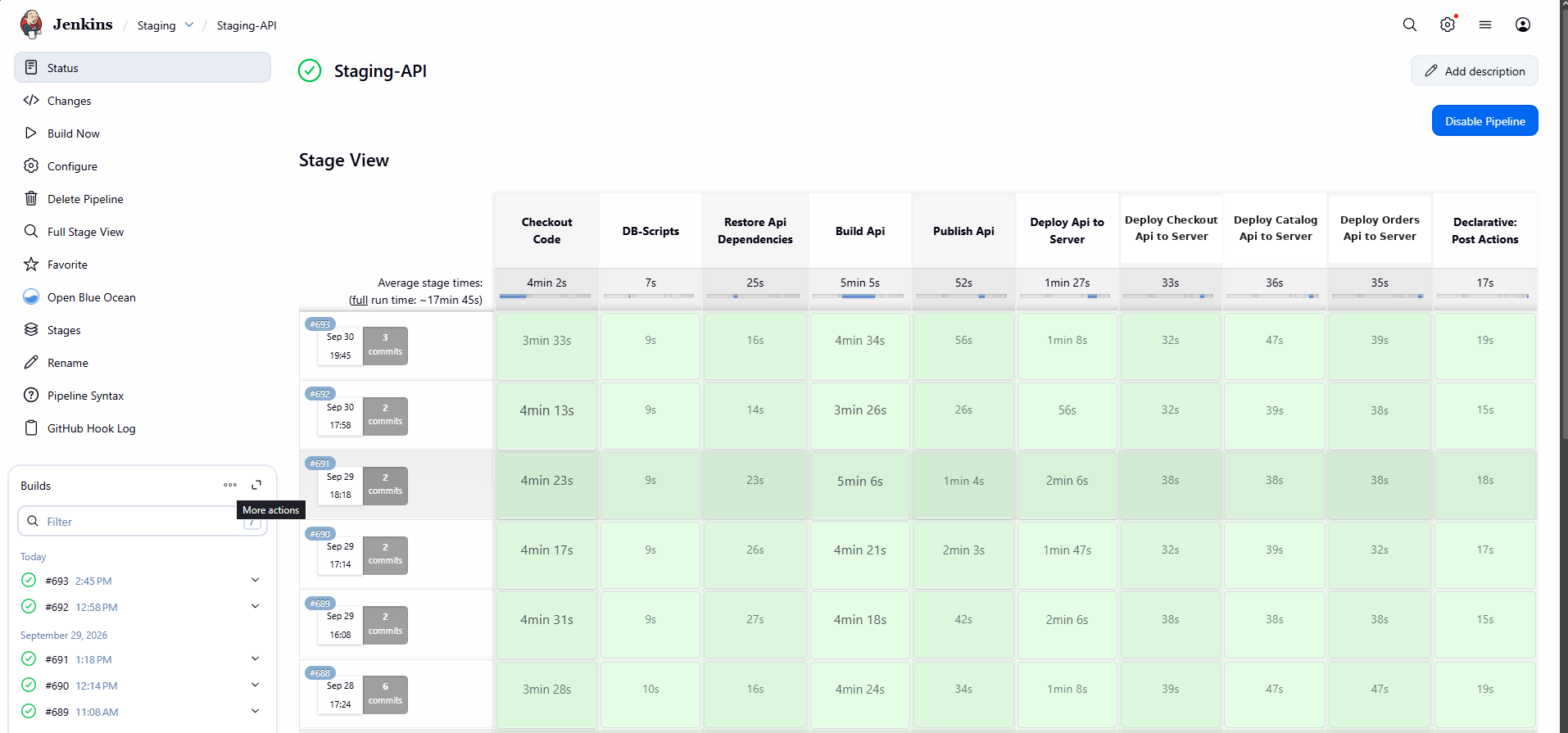
Jenkins Staging Pipeline View
Stage view of the staging API pipeline: checkout, database scripts, build, publish, and per-service deploys completing in under 18 minutes on every commit.
 🔍 Expand Job Dashboard
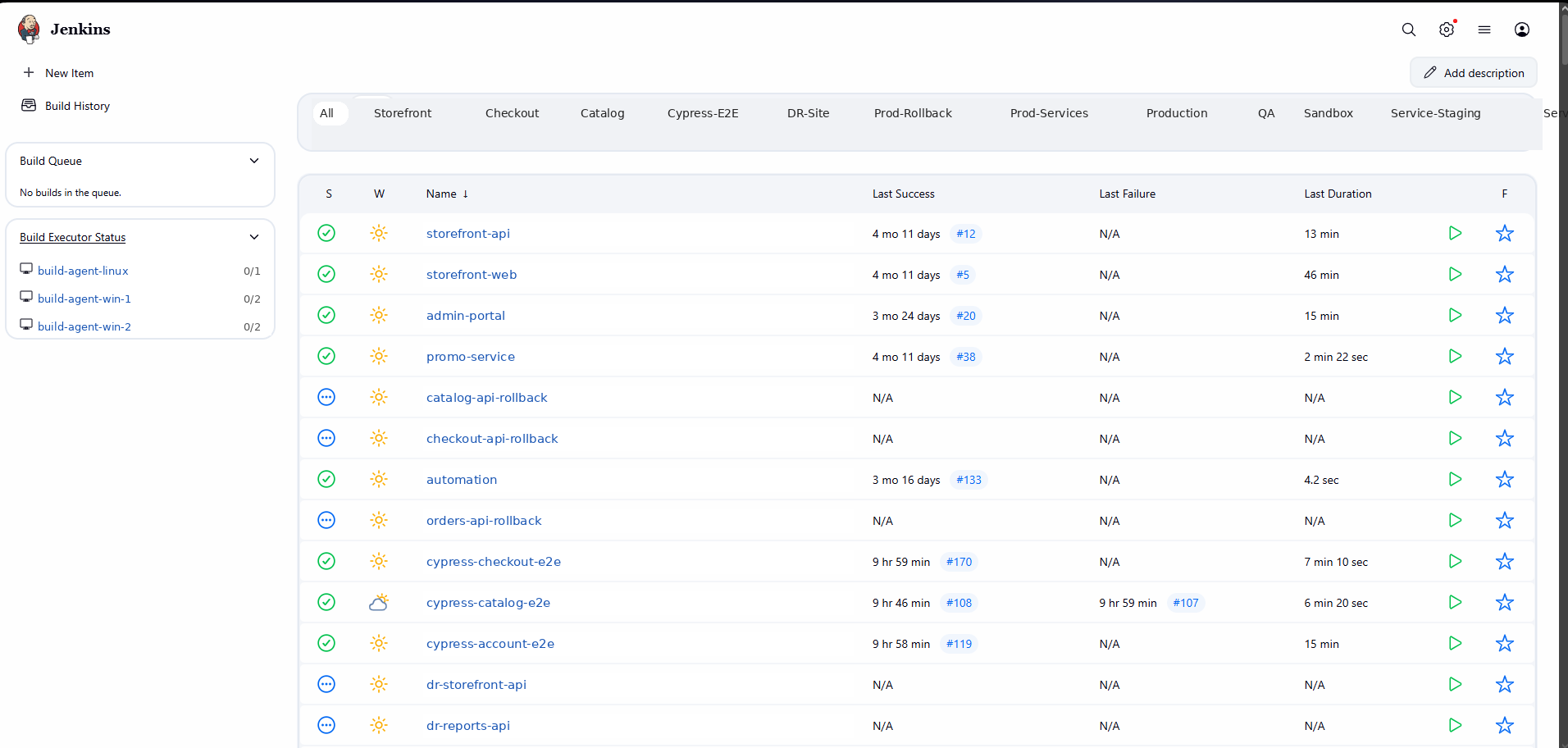
Jenkins Central Job Architecture
Storefront, checkout, and catalog pipelines integrated with Cypress end-to-end suites and automated one-click rollback jobs for every production API.
 🔍 Expand GitLab Merge Request
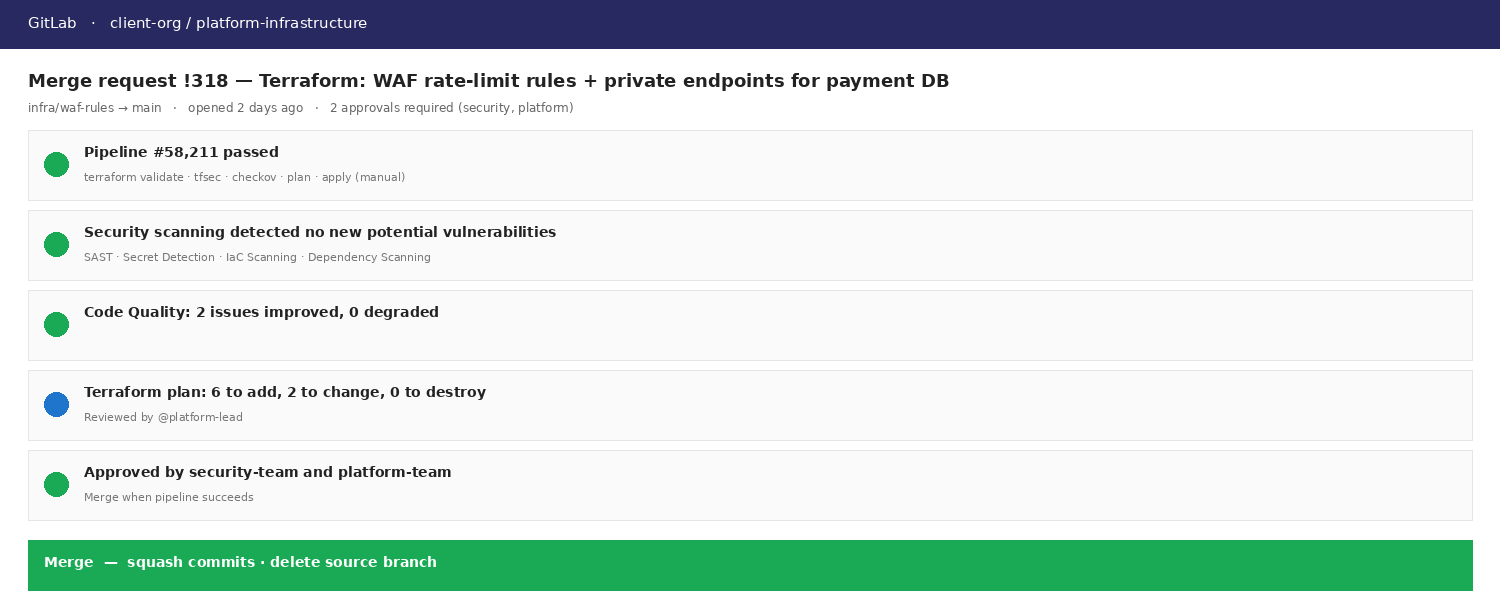
GitLab Infrastructure Control
Infrastructure-as-Code merge request with Terraform plan validation, tfsec/checkov IaC scanning, and dual approval requirements prior to production deployment.
 🔍 Expand SonarQube Report
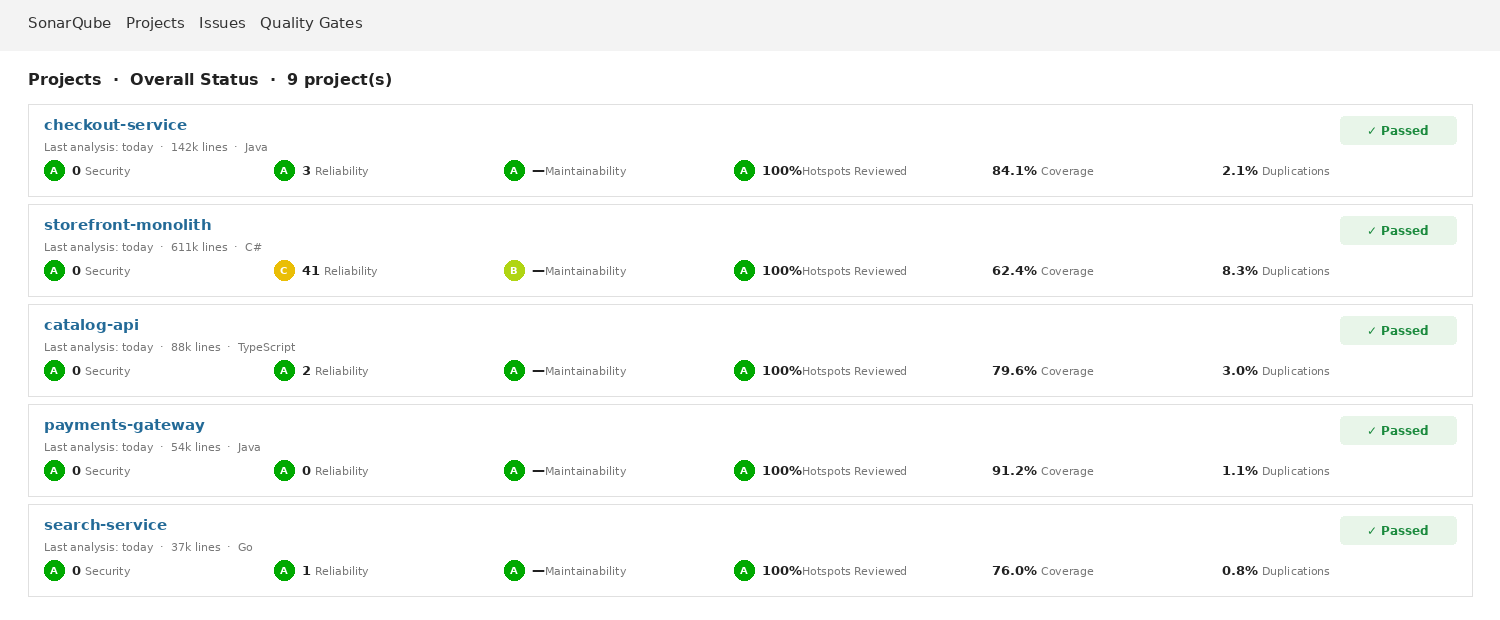
SonarQube Security Quality Gates
All nine project repositories passing automated quality gates with 100% of security hotspots reviewed and cleared before code merge.
 🔍 Expand JMeter Performance Test
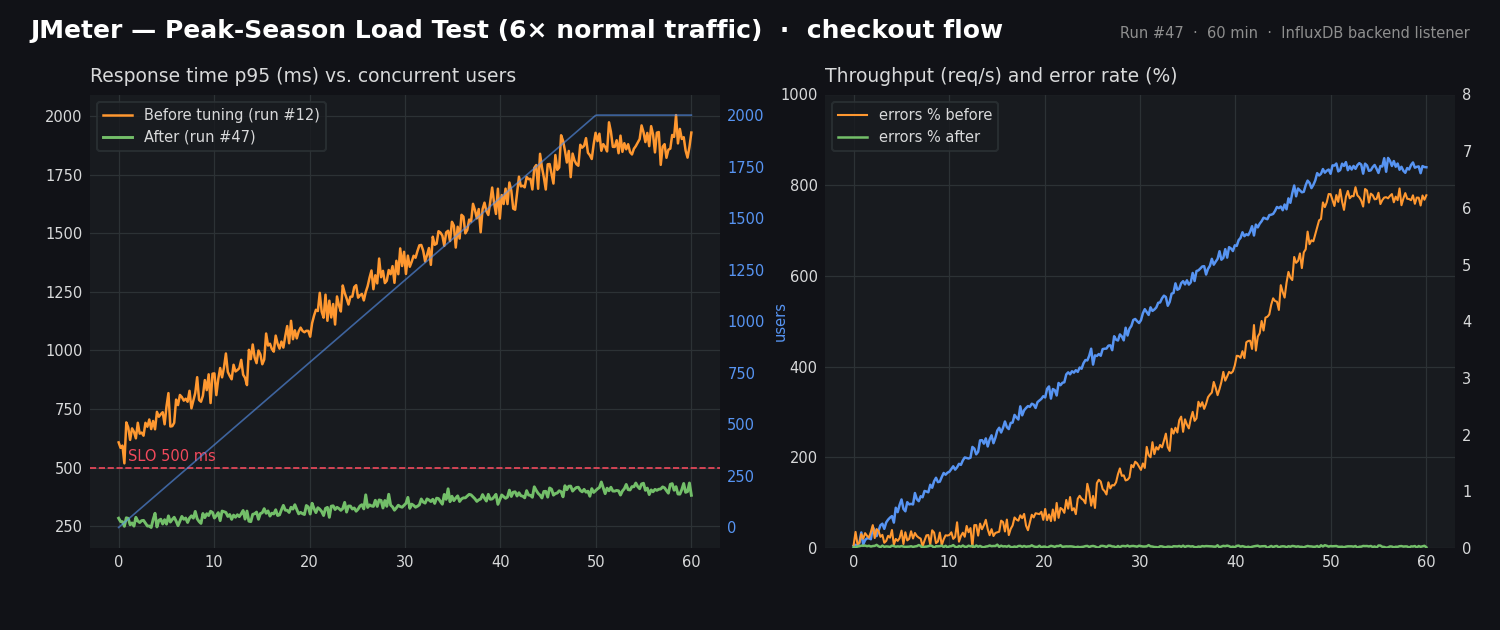
JMeter 6× Peak Load Testing
Real-time performance results against 2,000 concurrent users: p95 latency reduced below the 500ms SLO while error rate dropped from 4.1% to 0.03%.
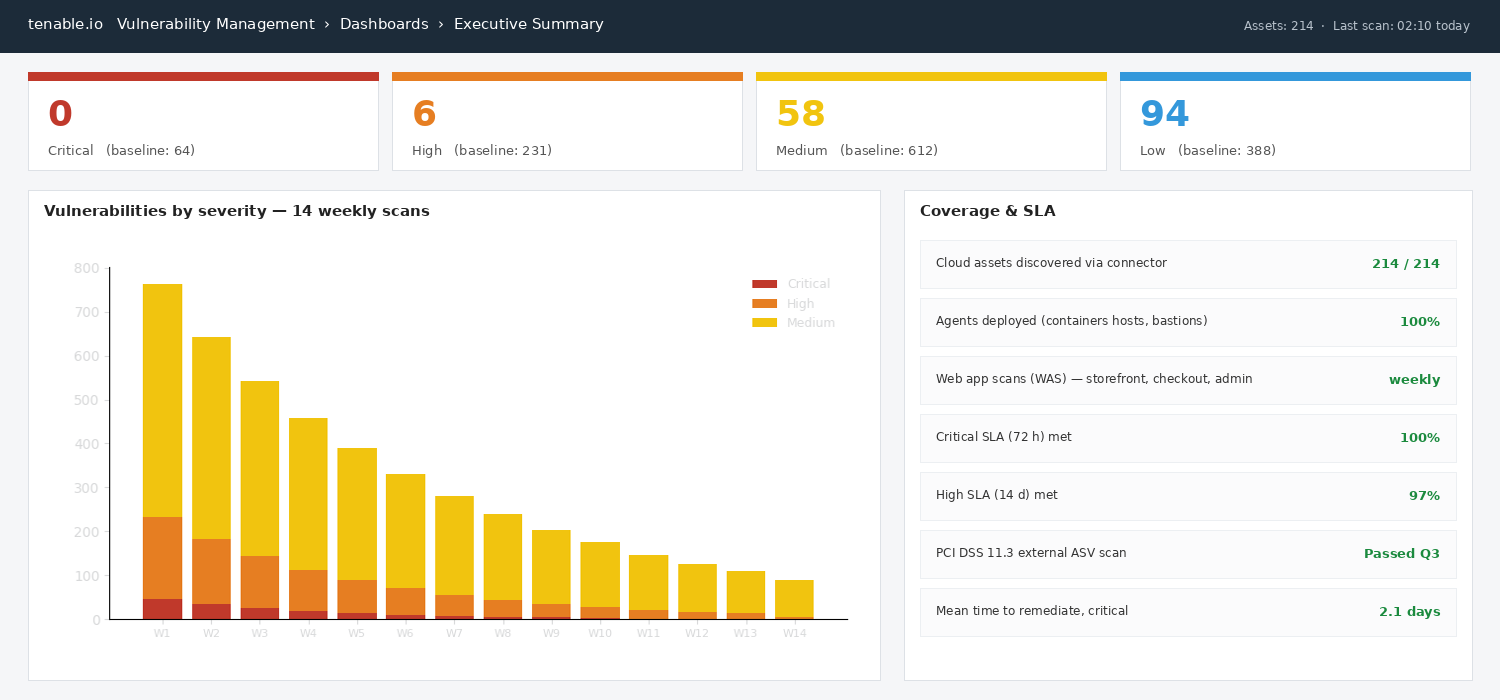 🔍 Expand Tenable Dashboard
Tenable.io Vulnerability SLA Management
Critical vulnerabilities eliminated across 14 weekly scans, achieving 100% SLA compliance and a passed PCI DSS external ASV scan.
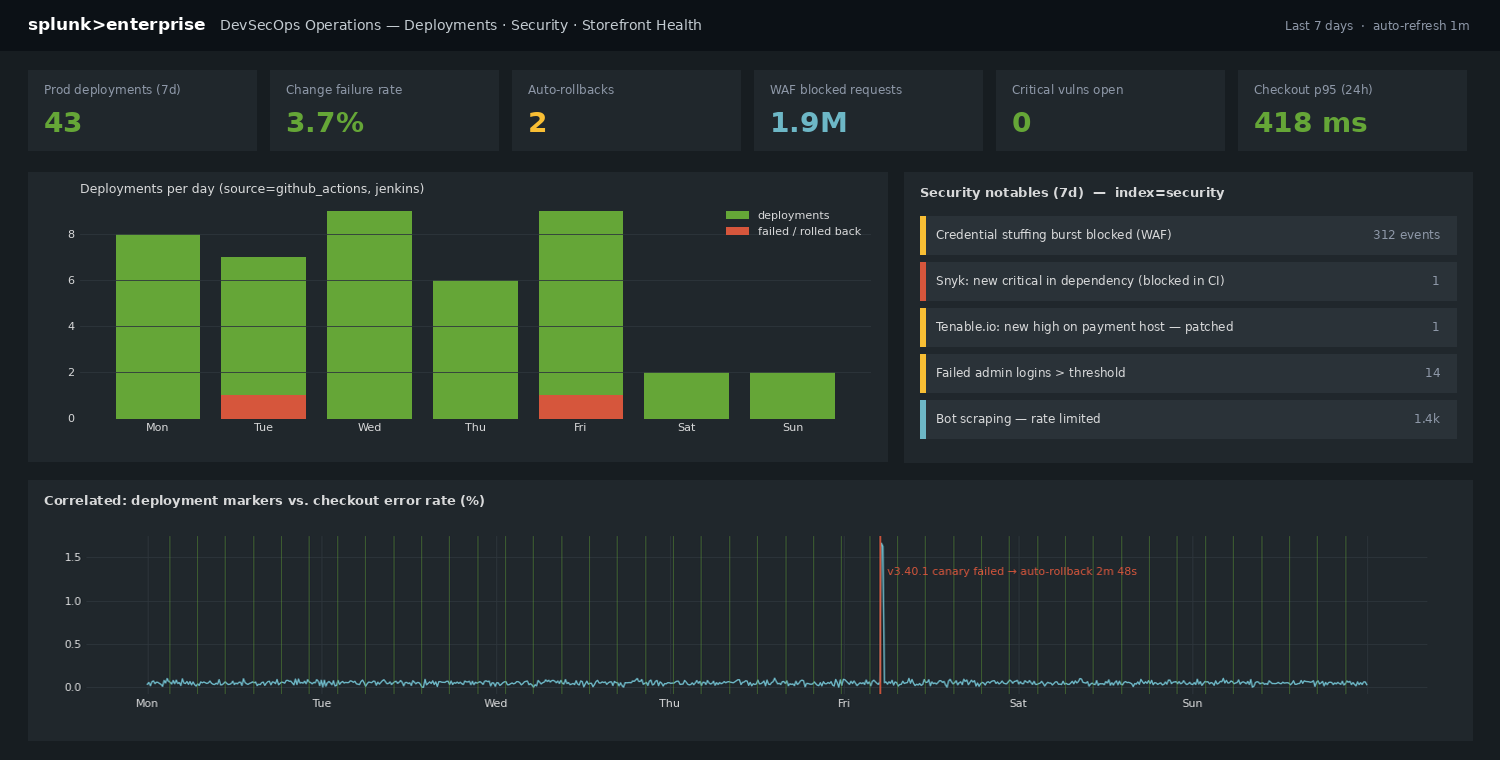 🔍 Expand Splunk Dashboard
Splunk Enterprise Unified Telemetry
Correlated deployment markers against error rates, WAF blocks, and security events into a single executive command center.
“Releases used to be the scariest thing we did. Now they’re the most boring — and I get a Splunk dashboard instead of a Saturday-night phone call.”
Still Releasing on Weekends or Shipping Without Security?
Partner with Cyber Oxygen to automate your CI/CD pipelines, embed automated security gates, and ship code faster with confidence.
Book a 30-Minute DevSecOps Review